ADA Compliant Portable Restrooms at Temporary Occasions: What the Standards Say
Temporary occasions move fast. A permit gets authorized, suppliers line up, fence enters, power is patched together, and after that somebody understands the toilet plan was treated like an afterthought. That is typically the moment when accessibility ends up being urgent instead of intentional.
For visitors that make use of mobility devices, walkers, canes, or that require more space and support, that scramble has real effects. An unattainable toilet configuration is not a minor aggravation. It can suggest a person leaves early, prevents food and beverage, or makes a decision not to participate in in any way. If you have ever watched a household circle a congested event trying to find an ada accessible portable toilet that is in fact useful, not simply classified, you comprehend how rapidly a preparation miss turns into exclusion.
The good information is that the baseline federal requirement is not mysterious. For portable commode services in the United States, the managing accessibility standard is the 2010 ADA Specifications for Accessible Layout, as analyzed by the united state Accessibility Board and the Division of Justice. For momentary events, that issues more than many organizers realize. "Short-term" does not mean "outside the guidelines."
The demand that obtains missed out on most often
When mobile single-user bathroom units are offered in a collection, at least 5 percent of the systems in each collection should come. The Accessibility Board has explained that this uses also at short-lived events.
That one sentence cleans up a shocking quantity of confusion.
People typically presume there is one event-wide number that can be fixed by dropping a solitary larger device someplace on site. That is not just how this works when you are managing clusters. If an occasion has numerous washroom collections spread across the premises, the 5 percent guideline relates to each cluster, not just the overall count across the building. In functional terms, an ada compliant mobile bathroom put at the much edge of a festival does not take care of a hard to reach bank of systems near the main stage.
That distinction issues since short-lived occasions are often set out around distance, terrain, and group circulation. An accessible system that exists just on paper can still be functionally out of reach.
This is where organizers often get floundered by language. They may ask for "one handicap device" or "one ADA bathroom" without connecting that demand to the real cluster design. If you are ordering an ada portable bathroom service, the right inquiry is not only how many devices you need in general. It is exactly how those systems are grouped, where those groups sit, and whether each organizing includes the called for easily accessible presence.
"Obtainable" is not simply a larger box
A great deal of individuals photo ada compliant mobile toilets as simply extra-large portable toilets. Dimension belongs to the image, however it is not the standard.
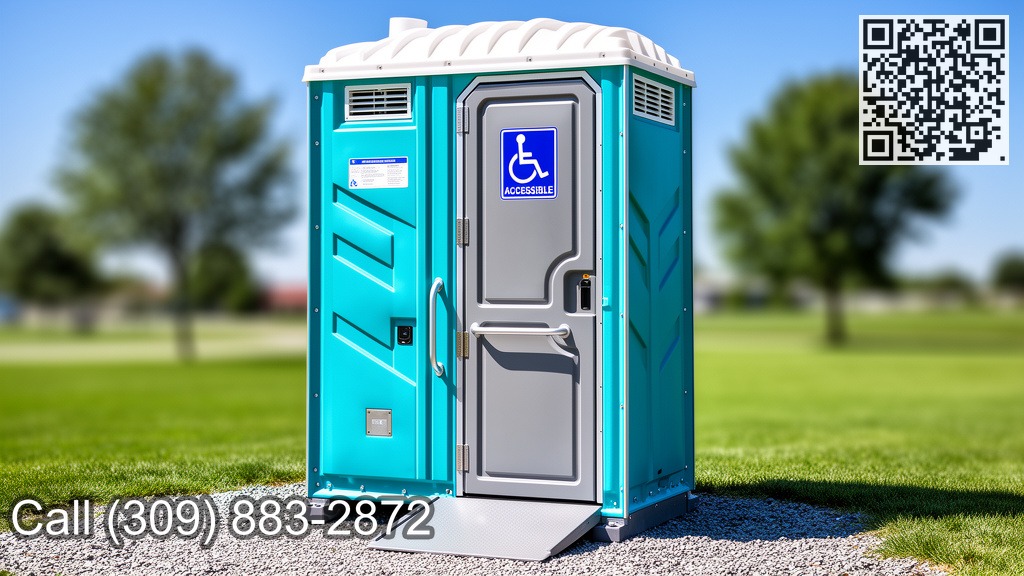
The devices need to satisfy the toilet-room technological requirements that apply, including transforming room, door maneuvering clearances, component clearances, and appropriate grab bar and water closet clearance regulations. They also must have an accessible entry and be connected by an available route. If ramps or touchdowns are required, those aspects have to abide by the ADA technical needs too.
That is where event planning becomes extremely concrete. You can rent out an ada-compliant mobile bathroom and still develop an inaccessible installment by where or just how you put it. A certified device dropped onto soft ground with no stable approach, or set where the entry can not be reached without going across a rut, curb, or steep short-lived limit, is a problem. The very same chooses a system squeezed also close to fencing, barricades, utility boxes, or one more trailer so the door area no more provides useful handling space.
I have seen occasions do nearly everything right on paper and still stop working in the last 10 feet. The rental order included the appropriate ada certified easily accessible portable restrooms. The vendor supplied them. The symbol got on the door. After that another professional moved the positioning to include a food truck line, and instantly the method narrowed and the entrance experience transformed. Nobody intended to create a barrier. It happened because availability was treated as a distribution item instead of a site problem that had to be protected.
The sign on the door issues, however it is not enough
Accessible mobile toilet systems should be related to the International Icon of Accessibility.
That seems straightforward, yet it matters for more than conformity. At a congested occasion, people need to be able to find the ideal unit rapidly, without asking personnel to fix a fundamental dignity concern. Clear identification decreases complication and conserves time.
Still, a significant door does not treat a poor layout. I have enjoyed visitors roll or stroll toward a system with the ease of access icon, only to find the course obstructed by mud, loose cable television covers, or crowd control fencing that was added later in the day. The tag claimed something. The site stated another.
That gap deserves taking notice of since it prevails at temporary events. Unlike permanent structures, occasion sites transform by the hour. Deliveries show up. Generators obtain rearranged. Waste bins overflow into flow courses. A staff member parks a cart in the wrong location for twenty minutes, which ends up being two hours. Access can wander out of compliance also if the initial placement was sound.
What occasion coordinators ought to verify before guests arrive
If you are in charge of the bathroom plan, there are a few factors that are worthy of a hard look before gates open.
- Count each restroom collection individually and confirm that at the very least 5 percent of the single-user portable systems because collection are accessible.
- Make certain every available unit is noted with the International Symbol of Accessibility.
- Check the course to the system, not just the system itself, and verify the entry is accessible.
- If a ramp or touchdown becomes part of the arrangement, validate that it adheres to ADA technological requirements.
- Look at the clearance around the door and inside the device with the technological requirements in mind, especially transforming and steering space.
That is a short checklist, yet it catches the errors I see most often. The first error is undercounting since somebody considered the entire event rather than the cluster. The 2nd is presuming the vendor alone controls conformity. The third is concentrating on shipment and missing confirmation after the site has actually been fully built out.
The route becomes part of the restroom
This point deserves its own focus since it is where numerous great objectives fail.
An ada mobile bathroom does not stand alone. It has to belong to an obtainable path of travel and have an available entry. That might appear evident, however short-term occasions are well-known for creating uncomfortable shifts. Gravel obtains spread unevenly. Short-lived floor covering ends prior to the bathroom zone. A system is parked just beyond a lip or incline that looked safe during load-in and really feels difficult when browsing with a wheelchair.
The federal requirement does not ask whether a visitor can in theory reach the washroom with assistance. It calls for an available route and entrance. Those are standard components of use, not optional extras.
For organizers, this suggests the bathroom discussion requires to take place early adequate to affect website format. If you wait until completion, you are frequently trying to fix ease of access with whatever space continues to be. That normally brings about unpleasant placements behind phases, beside dumpsters, or at the edge of uneven ground where larger systems happen to fit. Already, you are no longer preparing for gain access to. You are improvising around constraints.
There is likewise a human side to path planning that does disappoint up well on a website map. Individuals do not experience the event from a bird's-eye view. They move with it in weather condition, crowds, noise, and exhaustion. A path that seems appropriate in a quiet early morning examination can become much tougher once lines kind and sightlines disappear. An ada handicap easily accessible portable bathroom should not really feel like a special expedition put away from every little thing else.
Temporary does not imply exempt
One of the much more stubborn misconceptions in event procedures is that short-term configurations get even more flexibility due to the fact that they are not irreversible building. In this field, that assumption causes trouble.
The Gain access to Board has especially suggested that the collection requirement uses also at short-term occasions. So if a festival, reasonable, concert, community event, or pop-up market is counting on portable single-user units, access is still in play. The fact that the occasion lasts a day or a weekend does not remove the standard.
There is one subtlety worth understanding because it turns up in discussions with service providers and site supervisors. The older 1991 ADA layout standards identified mobile bathroom units at building and construction websites utilized exclusively by building personnel and spared those from the pointed out portable-toilet access scoping requirement. That is not the same thing as saying portable restroom access does not matter typically. For general portable toilet services at public-facing events, the accessible-unit demand remains.
That distinction is very easy to obscure if somebody has functioned mainly around building and construction logistics and then uses the very same presumptions to a public occasion. The usage case issues. So does who the https://lorenzoepgo274.brightsora.com/posts/ada-mobile-washroom-rental-understanding-obtainable-toilet-room-demands centers are for.
Compliance on paper versus conformity in the field
There is a difference between ordering the right product and delivering an accessible experience.
An ada compliant mobile commode can lose its efficiency if the lock is hard to operate, if the door swing is obstructed by site clutter, or if the easily accessible device becomes the unofficial family washroom, storage space wardrobe, or VIP overflow due to the fact that it has even more area. The government standards in the verified context speak to the scoping and technical needs, not to every functional habit that can undermine accessibility. However from an event-management perspective, procedures still matter.
This is where compassion is greater than tone. It is a planning tool.
A visitor that requires an easily accessible bathroom is currently doing mental mathematics prior to they ask any individual for aid. How much is it. Will it be available. Will certainly I have enough area to get in and transform. Will there be a crowd in front of it. Will an employee comprehend what I am requesting for. When coordinators treat the ada certified mobile toilets as one line product among lots of, visitors really feel the difference.
The far better method is to believe in regards to integrity. If somebody adheres to the indications to the marked unit, can they really utilize it without settlement, without rerouting via the back of residence, and without needing an unfamiliar person to relocate obstacles out of the way? That is a much more straightforward examination than merely verifying the invoice included one ada portable toilet.
Why collection preparation changes the budget conversation
The 5 percent guideline at each cluster can affect budget plans in methods new organizers do not anticipate. If you have several tiny washroom collections spread across a website, the available count might boost compared to a solitary centralized bank. That does not mean the standard is unfair. It means availability is connected to how people experience the event, not just exactly how equipment is amounted to on a spreadsheet.
I have seen teams react to that reality in 2 really different means. One method is defensive: they treat every easily accessible system as an expensive exemption and keep trying to upgrade around it. The other strategy is smarter: they rethink collection placement, decrease unnecessary fragmentation, and coordinate washroom areas with primary blood circulation courses from the beginning. The 2nd team typically spends even more intelligently due to the fact that they are resolving the ideal issue earlier.
This additionally impacts vendor conversations. If you ask late in the process for "one ADA system," you may be compeling a patch. If you clarify the cluster layout and ask just how to straighten the washroom strategy with ada mobile commode requirements, the discussion gets even more practical and much less reactive.
The standards rest inside a broader enforcement climate
Accessibility conformity is not fading into the background. If anything, organizations are seeing a broader compliance environment. A current instance outside mobile toilets is the Division of Justice advice on internet and mobile access for state and city governments, with extended target dates encountering 2027 for bigger entities. That guidance is not concerning short-term event bathrooms, however it reflects a bigger truth: ADA conformity remains active, noticeable, and enforceable throughout sectors.
For event coordinators, that broader climate needs to be a hint to take physical availability seriously rather than treating it as a box to check. Portable cleanliness may feel like a tiny functional detail alongside ticketing, safety and security, or amusement. For the person that can not use the restroom offered, it is not a small detail at all.
Common judgment calls that are worthy of genuine attention
Not every occasion website is cool and degree. Parks, fairgrounds, closed roads, and open areas all introduce restrictions. The criteria do not vanish when the website gets messy, but real-world preparation does entail judgment. The toughest groups I have dealt with ask more challenging inquiries earlier.
They ask whether a collection must relocate more detailed to a well-known easily accessible path instead of forcing a ramp solution into a poor area. They ask whether a fenced queue is mosting likely to narrow the method later on in the day. They ask who has authority to authorize any kind of area adjustments after installation, due to the fact that "just shifting the systems a little" can reverse compliance quickly.
They also recognize that an accessible unit needs to not end up being separated. In some cases a coordinator positions the bigger system faraway from the main financial institution due to the fact that it healthy much better there. On a layout, that may look efficient. On the ground, it can really feel setting apart and bothersome. Accessibility is not just concerning technological conformity. It is additionally concerning equitable involvement, which commonly means keeping the easily accessible choice meaningfully integrated into the event layout.
Questions worth asking your supplier and site team
A short conversation before shipment can prevent a lengthy day of fixes later.
- How numerous bathroom collections will there be, and the amount of available units are required in each one to meet the 5 percent rule?
- Where will certainly the accessible path per system start and end when secure fencing, floor covering, and tools are in place?
- Will any ramps or touchdowns be utilized, and if so, who is verifying they meet ADA technological requirements?
- How will the accessible systems be recognized on website so guests can find them easily?
- Who is responsible for the last field check after all other occasion elements are installed?
Those questions are not legal theater. They are functional safeguards. The majority of availability failures at short-lived occasions do not come from unique technical disagreements. They originate from regular control gaps between the restroom supplier, the site crew, and the occasion manager.
What a thoughtful arrangement looks like
A thoughtful arrangement is not always the fanciest one. It is the one where the accessible restroom plan was considered early, mounted thoroughly, and secured throughout the event.
The ada certified obtainable portable restrooms are counted properly within each collection. The devices are identified. The course is useful. The entryway works as meant. The door location and interior clearances are not endangered by hasty placement. Personnel recognize where the systems are and do not treat them as storage room or overflow. If website problems transform, someone checks that availability did not alter with them.
That is the sort of preparing visitors rarely notice, which is precisely the factor. Great availability usually really feels typical due to the fact that it eliminates friction before any individual needs to call it. Individuals can simply participate in the event, appreciate themselves, and utilize the bathroom with dignity.
For organizers, that must be the standard to go for. Not just renting out an ada-compliant mobile bathroom, but producing an arrangement that in fact helps the people who require it. Temporary events teem with relocating parts. Access ought to be among the pieces that stays steady.
 Ask ChatGPT
 Ask Grok
 Ask Perplexity
 Ask Claude
 Ask Google AI
 Ask You